City of Mesa Water Resources Advisory: Hidden Slab Leaks, Soil Heave, and Municipal Drainage Guidelines
Understanding Mesa post-tension slab foundation leaks, aggressive desert water chemistry, and City of Mesa municipal drainage directives to protect your residential investment.
MUNICIPAL COMPLIANCE BULLETIN: According to municipal plumbing data and regional geotechnical surveys across Maricopa County, homes constructed on monolithic post-tension concrete slabs experience elevated frequencies of subterranean plumbing line failures. The intersection of highly mineralized municipal water supplies, thermal expansion cycling, and expansive Sonoran clay soils produces subterranean pinhole leaks that often remain undetected beneath flooring for weeks.
City of Mesa Water Chemistry & Underground Piping Dynamics
Residential plumbing networks across Mesa receive treated surface water blended with deep municipal groundwater wells. This water profile features distinct chemical and mineral characteristics:
- High Total Dissolved Solids (TDS): Mesa municipal water contains elevated concentrations of calcium carbonate and magnesium, frequently ranging between 400 and 750 ppm. Over time, mineral scaling accelerates internal pitting and galvanic corrosion inside below-slab copper lines.
- Thermal Ground Differentials: Underground hot-water supply lines expand and contract against abrasive aggregate sub-bases during each plumbing cycle. Friction against concrete aggregate wears down pipe outer walls, causing pressurized spray beneath the moisture barrier.
- Expansive Caliche Subsoils: Clay-rich desert soils expand significantly when exposed to subterranean water leakage. This hydraulic pressure creates foundation heave, cracking exterior masonry, buckling interior tile, and stressing door frames throughout the home.
Five Warning Signs of an Active Under-Slab Leak
- Unexplained Warm Spots on Flooring: Pressurized domestic hot water lines heating tile, luxury vinyl plank, or carpet padding from below.
- Audible Water Flow Behind Walls: A constant hissing or rushing sound near bathroom chases or kitchen manifolds when all faucets are firmly closed.
- Escalating Municipal Water Utility Invoices: A sharp increase in City of Mesa monthly water volume consumption without changes in landscape irrigation.
- Perimeter Foundation Dampness: Efflorescence (white powdery mineral salt residue) blooming along exterior stucco stem walls or garage perimeter edges.
- Sudden Interior Baseboard Separation: Warping, mold spotting, or discoloration on baseboards in hallway corridors adjacent to plumbing chases.
Non-Invasive Diagnostic and Extraction Standards
Under IICRC S500 standards, addressing slab leaks requires precision diagnostic tools rather than indiscriminate concrete jackhammering:
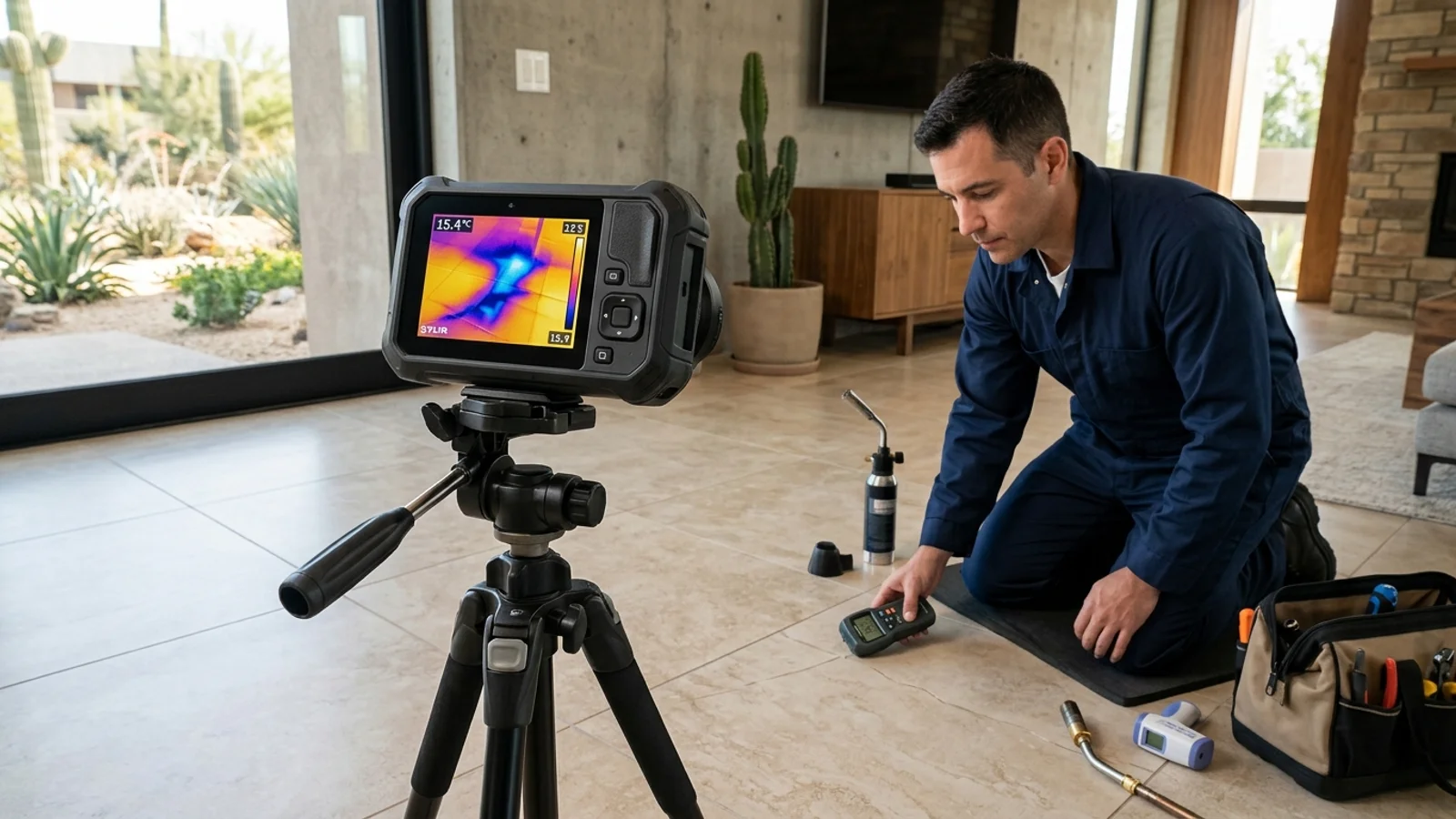
- High-Resolution FLIR Infrared Thermography: Pinpoints temperature anomalies beneath tile and concrete slabs with 0.1°C thermal sensitivity.
- Acoustic Ultrasonic Leak Detection: Isolates the high-frequency vibration of pressurized subterranean water escape through solid slab assemblies.
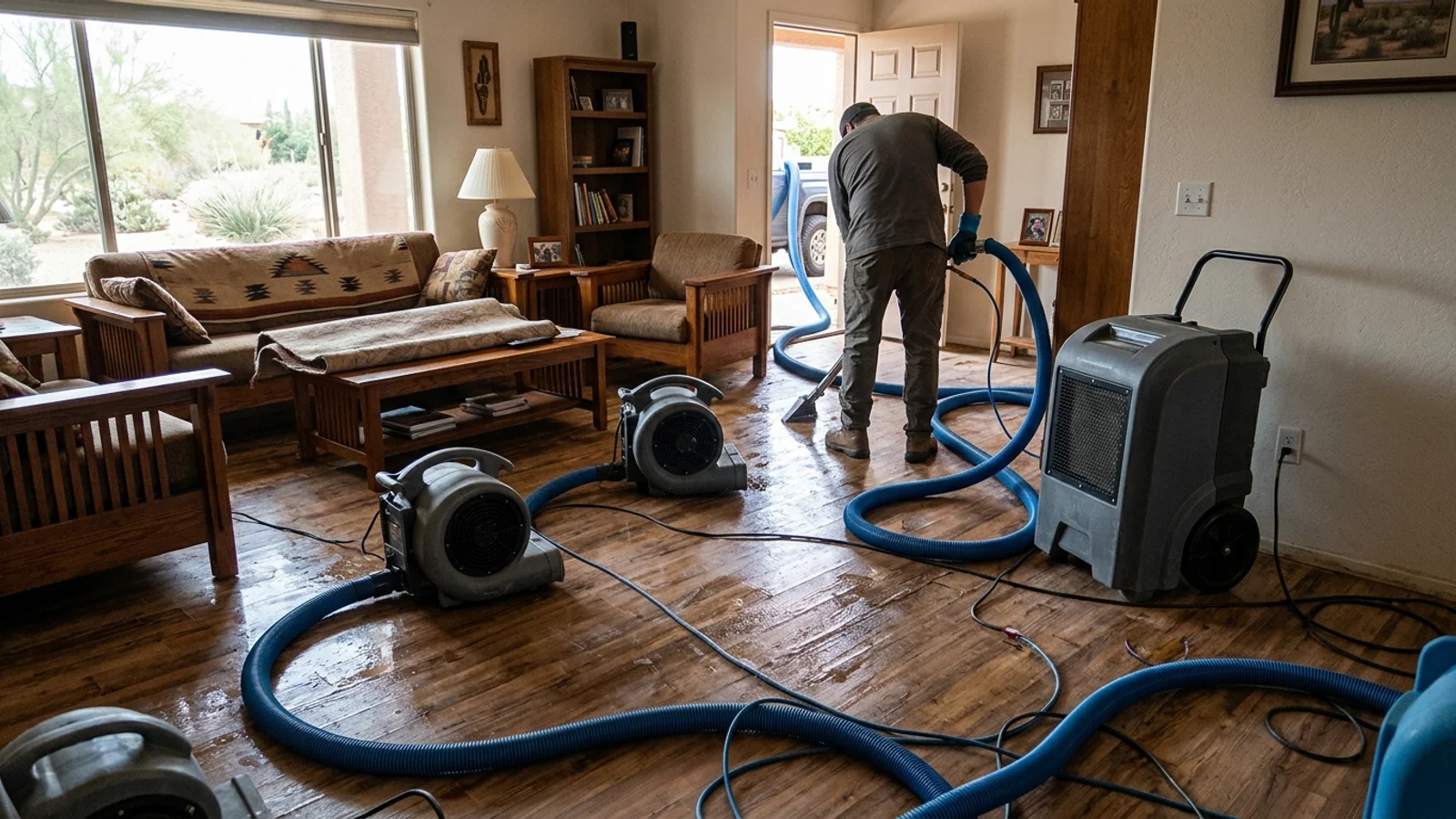
- Controlled Sub-Slab Extraction: Once emergency plumbing reroutes or spot-repairs are established, commercial desiccants and negative-air drying mats extract moisture out of the slab matrix, preventing permanent foundation destabilization.