Mesa Streets Turn to Rivers: Water Rescues, Flooded Homes & School Closures After Heavy Sept. 16 Storms
Heavy monsoon rain flooded Mesa streets near Higley and Delta Park, prompting rescues and water damage at Red Mountain High. What homeowners must inspect now.
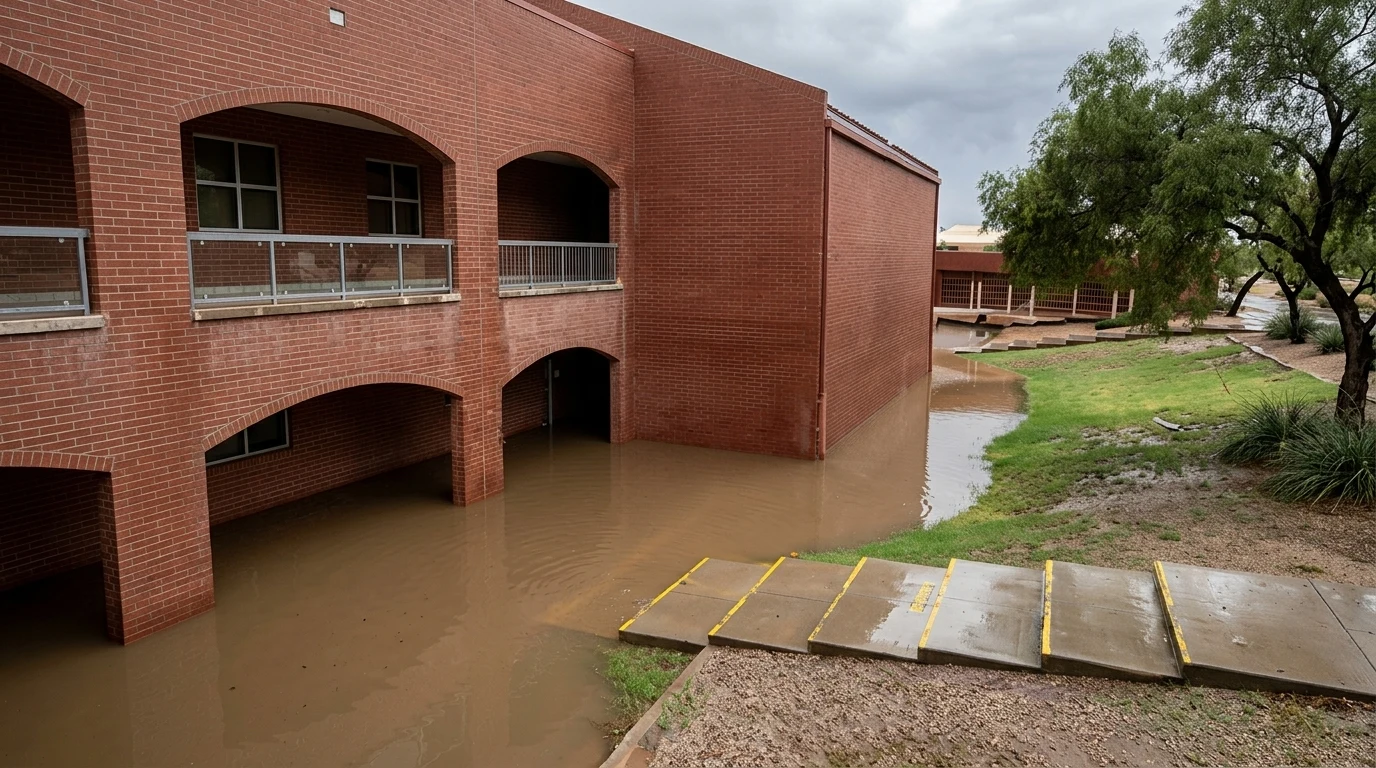
CRITICAL FLOOD ADVISORY: Severe monsoon storms on Wednesday, September 16, produced 2 to nearly 3.9 inches of rain across East Mesa in under two hours. The deluge overwhelmed local drainage systems, submerged roadways near Higley and University, caused structural water damage at Red Mountain High School, and flooded residential slab foundations. Property owners must inspect living areas and extract trapped water within 24 to 48 hours to prevent severe structural decay and rapid mold colonization.
Severe Monsoon Rainfall and Street Inundation in East Mesa
Heavy monsoon cells stalled directly over the East Valley during the late afternoon and evening of September 16, inundating municipal retention basins and overwhelming street drainage across East Mesa. Thunder Mountain weather stations recorded peak accumulation totals approaching 3.9 inches, while nearby Skyline Park measured more than 3 inches of rapid precipitation.
The sheer volume of storm runoff transformed major arterial roads and residential corridors into rushing waterways. Mesa Fire and Medical Department crews conducted urgent water rescues, pulling multiple stranded motorists from flooded vehicles along University Drive near Higley Road. Simultaneously, the retention basin at Delta Park reached capacity, temporarily creating an impromptu neighborhood lake where local residents kayaked just blocks away from active emergency operations.
Roadway closures quickly multiplied throughout the eastern sector of the city. Mesa transportation crews blocked traffic at Higley Road and Brown Road as floodwaters crested curb lines. Significant street-level inundation also swept through neighborhoods near 64th Street and McKellips Road, Power Road and Hermosa Vista Drive, and the low-lying junction of University Drive and Meridian Road, leaving thick deposits of desert mud and silt across driveways and walkways.
Overflowing flood-control canal at Higley and Main in east Mesa sending storm runoff over roadway banks.
— Ben Franklin (@nilknarf_neb) September 16, 2026
Red Mountain High School Facility Flooding and Electrical Impact
The same convective storm system inflicted substantial damage on regional public infrastructure. At Red Mountain High School, located in East Mesa, severe sheet flow penetrated interior educational facilities while lightning struck both a power transformer and an emergency backup generator on campus.
Principal Bruce Cosseboom announced Thursday morning that the entire 100s-level classroom wing remains closed while municipal facility restoration crews assess structural moisture levels and extract standing water. School administrators relocated scheduled classes to unaffected campus facilities, while students whose district laptops suffered water damage received instructions to air-dry equipment completely before attempting to power devices on.
The incident highlights how sudden stormwater runoff can bypass commercial exterior drainage barriers, penetrating wall cavities and electrical raceways within minutes of torrential rainfall.
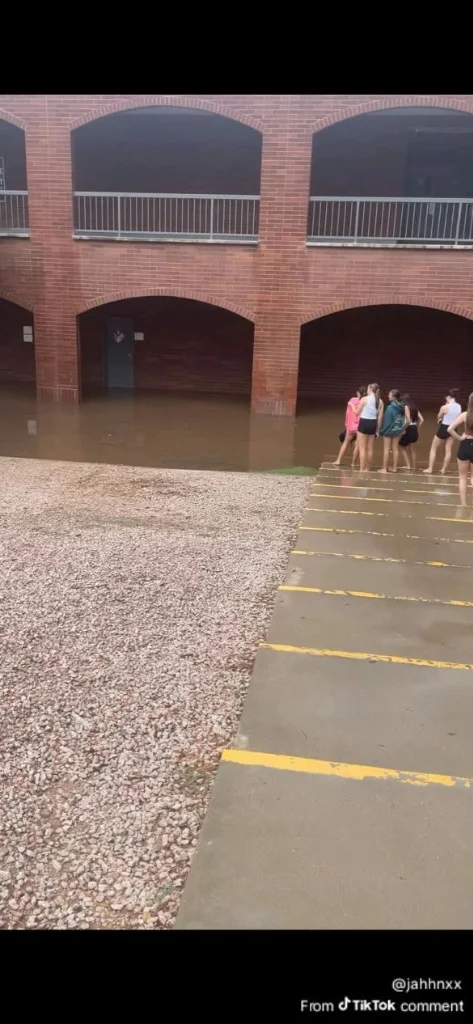
Red Mountain High School Official Community Update
Classroom relocations and campus flood mitigation underway following September 16 storm inundation and transformer outage.
Posted by Red Mountain High School on Facebook
What Mesa Homeowners Should Do Next
When desert floodwaters submerge yards, driveways, and concrete stem walls, moisture rapidly migrates into living areas through stucco weep screeds and entry door thresholds. Property owners across East Mesa, Las Sendas, and Red Mountain Ranch must conduct immediate inspections of their residences to identify hidden water intrusion points:
- Garage Slabs and Exterior Baseboards: Examine all garage perimeters and foundation walls where runoff may have pooled against exterior stucco or seeped beneath weatherstripping. Mud residue along baseboards indicates significant water penetration into structural wall assemblies.
- Rooflines, Parapets, and Attic Edges: Check ceilings and attic insulation for dampness or discoloration if intense wind-driven rain penetrated tile ridges, flashing joints, or skylight curbs during the peak of the cell.
- HVAC Return Plenums and Low Cabinets: Inspect floor-level return air grilles and kitchen or bathroom toe kicks if surface water entered the home. Porous subflooring and cabinet substrates absorb contaminated runoff quickly.
- Moisture Trapped Under Flooring: In Arizona homes built on post-tension concrete slabs, standing water readily travels underneath tile grout lines, luxury vinyl planks, and carpet padding. Surface fans are often insufficient to remove water trapped beneath these moisture-impermeable layers.
Homeowners should meticulously document all visible waterlines, structural dampness, and ruined personal property with date-stamped photographs and video before discarding damaged items or starting clean-up.
Critical 24- to 48-Hour Recovery and Mold Prevention Window
Arizona’s extreme heat combined with high ambient storm humidity accelerates the biological timeline for microbial amplification. Standing stormwater carrying desert caliche, road grime, and urban runoff is classified as Category 2 or Category 3 contaminated water, meaning mold spores can germinate inside drywall cavities within 24 to 48 hours.
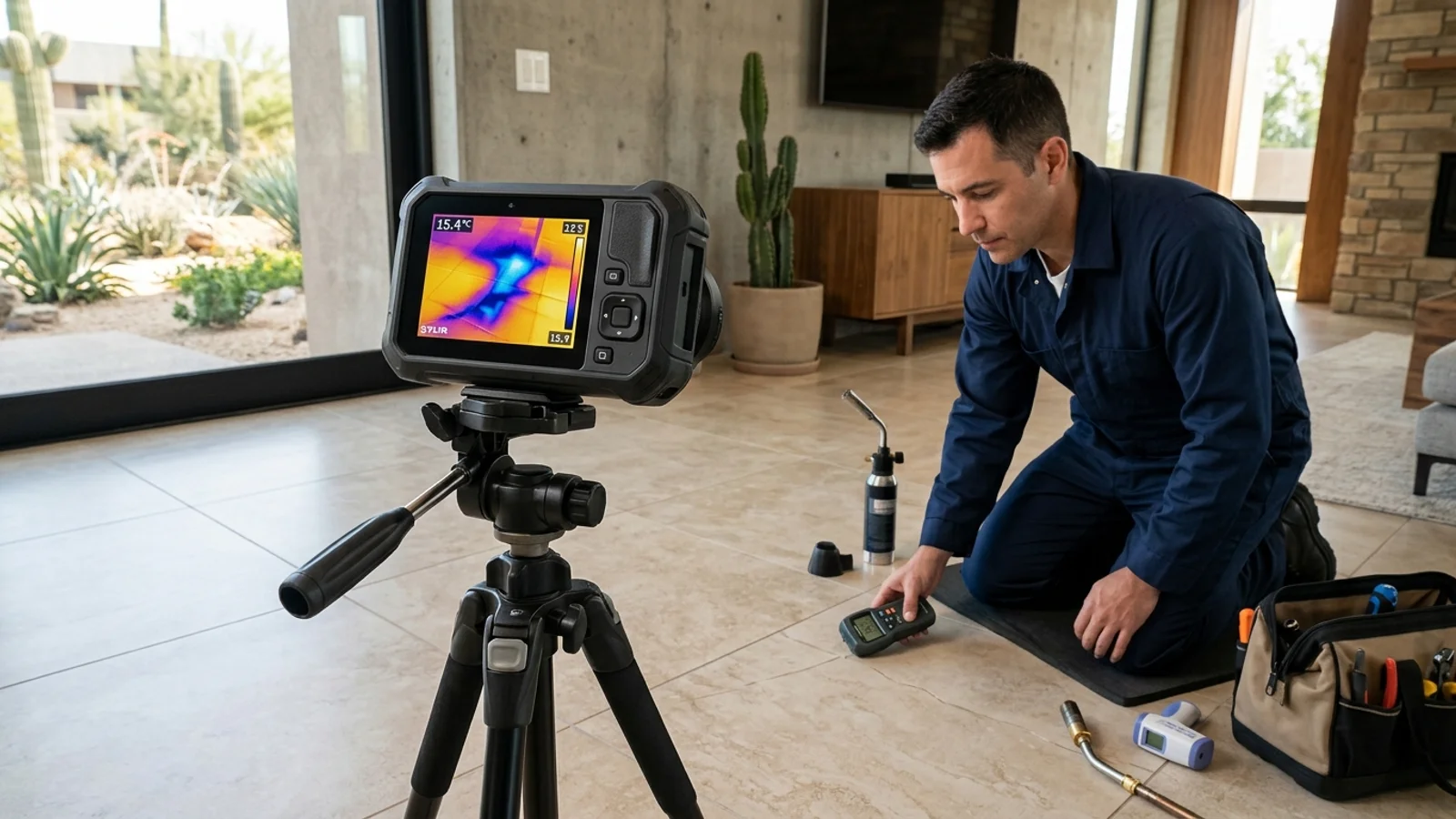
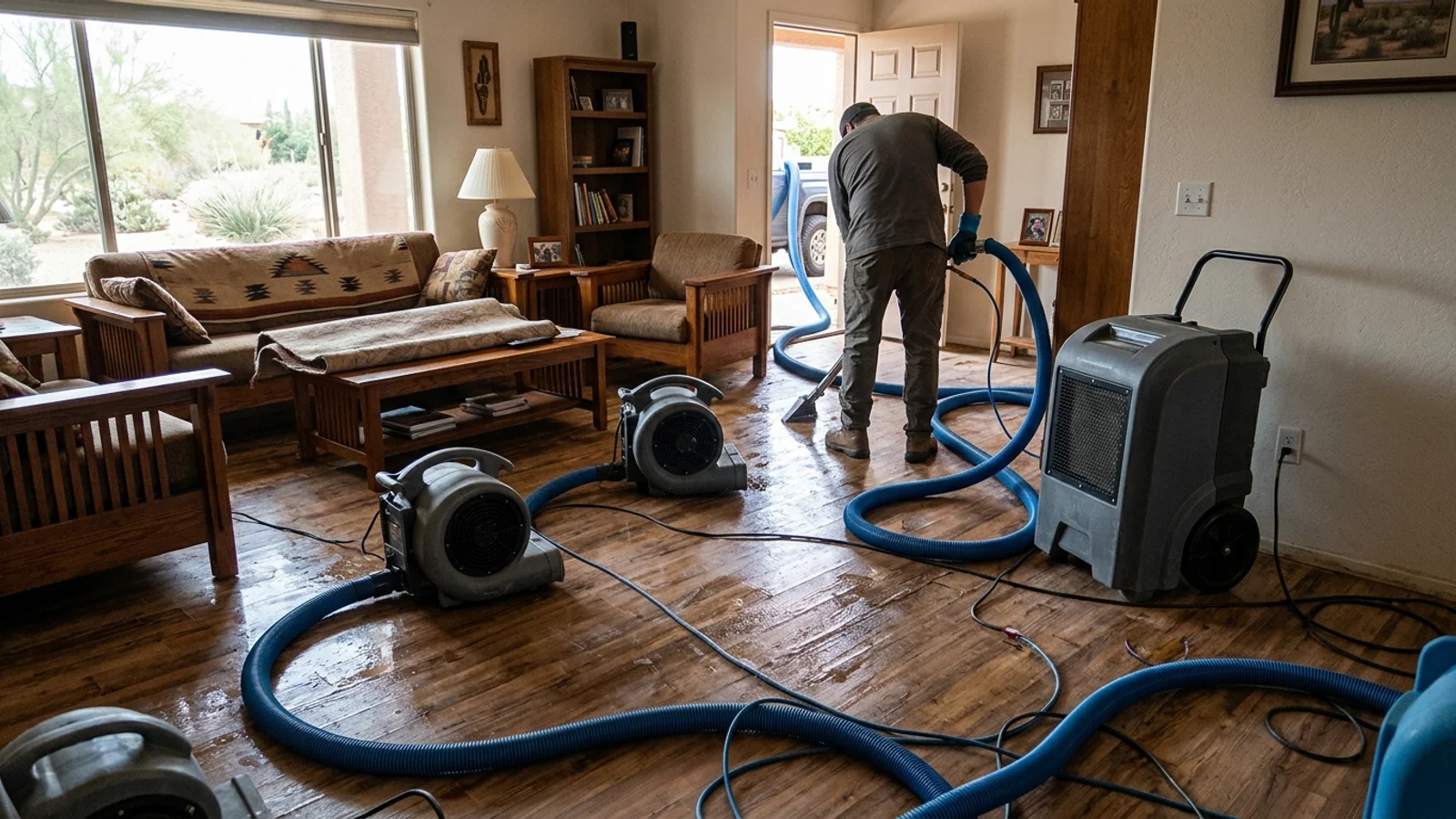
Simple household fans and open windows cannot extract moisture bound within structural framing or beneath sealed concrete slabs. Specialized Emergency Water Extraction utilizes industrial truck-mounted extraction vacuums, commercial LGR dehumidifiers, and thermal imaging cameras to locate and eliminate hidden pockets of moisture before permanent rot develops.
If storm runoff reached carpet, sheetrock, or interior insulation, contact professional Flood Damage Restoration specialists immediately. Rapid extraction protects structural integrity, prevents costly Mold Remediation, and ensures full compliance with insurance carrier drying standards.