Critical First 60 Minutes: Emergency Water Extraction Protocols for Mesa Homeowners
A burst supply line or failed water heater can release hundreds of gallons in minutes. Follow this IICRC-aligned 60-minute emergency containment and extraction checklist.
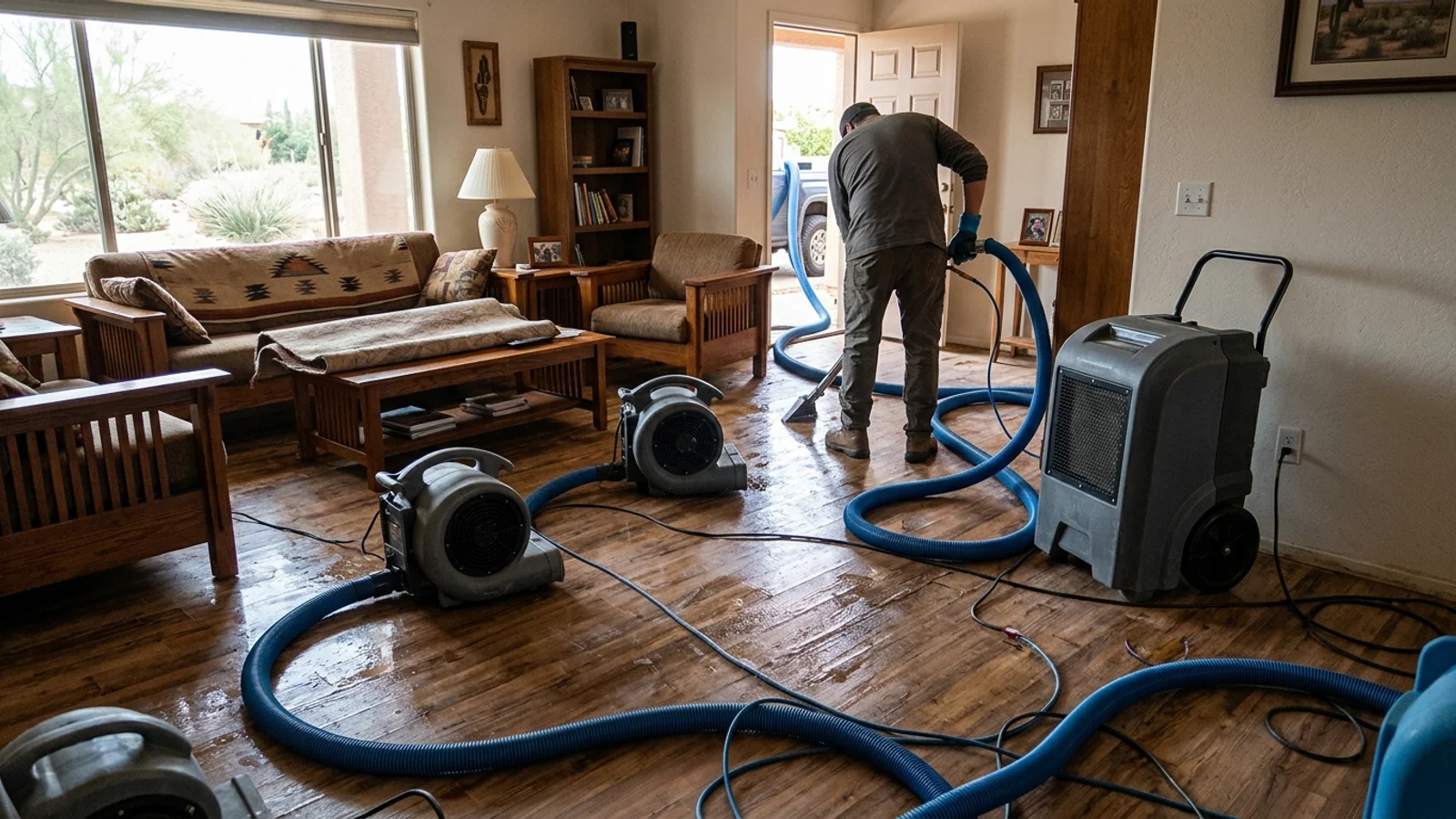
TIMELINE CRITICAL: Water spreads quickly across open floor plans. Within 15 minutes of a burst angle stop, washing machine supply failure, or water heater rupture, standing water penetrates drywall framing, subfloor adhesive matrices, and adjacent living spaces. What you execute in the initial 60 minutes dictates whether your property requires minor structural drying or full drywall demolition and insurance reconstruction.
Minute 0 to 15: Stop the Deluge & Eliminate Hazards
- Locate the Main Domestic Water Shutoff:
- In most Mesa single-family homes, the primary domestic gate valve or ball valve is positioned on the exterior wall near the hose bib on the garage side, or inside the garage near the water heater.
- Turn the lever a quarter turn perpendicular to the pipe (for ball valves) or clockwise until firmly seated (for gate valves). If the valve is seized, use a meter key at the municipal water meter box near the street curb.
- De-energize Flooded Electrical Zones:
- Walk strictly on dry flooring to your main circuit panel. If any flooded area contains floor outlets, baseboard heaters, or submerged appliance cords, shut off the individual breakers immediately. If dampness reaches the breaker panel itself, wait for professional crews or call your utility provider.
- Notify Emergency Restoration Dispatch:
- Call a local 24/7 restoration team with truck-mounted vacuum capacity. Rapid extraction prevents water from wicking upwards through wall assemblies beyond the 24-inch drywall cut line.
Minute 15 to 30: Forensic Photo & Video Documentation
Insurance adjusters require comprehensive pre-mitigation evidence before claims are approved. Perform these steps before moving belongings:
- Capture Wide-Angle Video First: Record a slow 360-degree video walking through each affected room, capturing standing water depth, wet carpet sloshing, and water lines along baseboards.
- Photograph High-Value Assets: Take close-up photos of furniture legs, electronics, area rugs, and cabinet toe-kicks in direct contact with moisture.
- Preserve the Failed Component: If a braided stainless supply line ruptured or a drain connection sheared, do not discard the defective part. Keep it in a dry plastic bag as physical evidence of sudden and accidental equipment failure.
Minute 30 to 60: Containment & Secondary Damage Mitigation
While dispatch crews are en route, take aggressive measures to prevent progressive moisture migration:
- Elevate Finished Furnishings: Place aluminum foil squares or plastic wrap under wooden and metal furniture legs to prevent wood tannins from permanently staining porous tile grout or carpet fibers.
- Clear Low-Lying Fabric & Paper: Lift draperies off wet flooring and hang them over curtain rods. Remove cardboard boxes, books, and documents from saturated closets.
- Do Not Rely on Household Vacuum Cleaners: Standard household vacuum cleaners pose severe electrical shock hazards and lack the cubic-feet-per-minute (CFM) extraction power to remove trapped subfloor water.
- Prepare for Direct Insurance Carrier Coordination: Have your homeowner policy declarations page or carrier name ready. Certified emergency restoration teams coordinate directly with your claims adjuster to manage dry-out documentation and ensure proper claim coverage.